Meme coin scrutiny in 2026 as Al Green presses Bessent over Trump's token
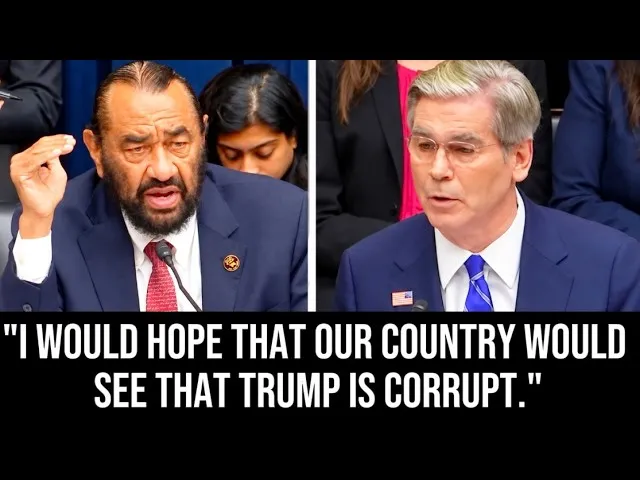
Video: WHOA: Al Green GRILLS Bessent over Trump's meme coin “scam”
Want articles like this for your own video to promote it on YouTube and Google? Order them through the Telegram bot @sat_sit_bot. The bot writes and publishes the articles itself (with your YouTube video embedded) on popular topical websites (no ads). Try it free: 50 articles on us.
· based on the channel Daniel Reed
Key takeaways
- Senator Al Green publicly questioned Treasury Secretary Scott Bessent about Trump's meme coin, framing it as a potential scam.
- The exchange, covered by Daniel Reed, centers on whether a sitting president should profit from a branded token.
- Critics in the audience compared meme coin trading to a Ponzi or pyramid scheme and questioned who bears the losses.
- Supporters of crypto argue meme coins are a small, high-risk corner of the market, not a reflection of the whole sector.
- Meme coins carry no cash flow, no claim on assets and rely purely on the next buyer paying more.
A meme coin is a cryptocurrency with no underlying business, cash flow or asset backing, whose price depends entirely on demand and hype; the scrutiny of Trump's branded token, raised when Senator Al Green grilled Treasury Secretary Scott Bessent and called it a potential scam, illustrates exactly why regulators and lawmakers treat this corner of crypto as high risk. The exchange, captured in a breakdown by Daniel Reed, turned a technical debate about digital assets into a question of public trust: should a sitting president profit from a token that ordinary buyers can lose money on?
What Al Green asked Bessent about the Trump meme coin
The core of the confrontation was accountability: who is responsible when a politically branded token loses value and retail buyers are left holding it. Al Green pressed Bessent on whether the Treasury has any role in policing a token tied to the president's name, and whether the appearance of a conflict of interest undermines confidence in US markets. Bessent's responses stayed general, which is what prompted the sharpest reactions in the room and online. The episode matters beyond politics because it sets a precedent: if a token can be launched by a public figure with minimal disclosure, the same playbook is available to anyone with a following.
How meme coins actually work and where the money comes from
A meme coin generates returns for early holders only when later buyers pay more, which is the mechanical definition of a greater-fool market. There is no revenue, no dividend and no claim on anything; the token's price is a pure coordination game. In practice this produces three recurring patterns:
- Concentrated supply. A small number of wallets often holds a large share of the token, so a single sale can collapse the price.
- Liquidity that can vanish. If the trading pool is thin or unlocked, large exits move the price far more than on established assets.
- Narrative-driven demand. Price follows attention, and attention decays, which is why most meme coins lose most of their value after the initial surge.
This is why critics describe meme coin trading as a Ponzi or pyramid scheme. The comparison is imprecise legally, but the economics rhyme: gains for early participants are funded by later ones.
Typical questions buyers raise about meme coins
Buyers keep asking the same practical questions, and the answers are uncomfortable but simple. Is it a scam if the token is openly sold? Not necessarily illegal, but a token with no disclosure, concentrated holdings and no utility is structurally risky regardless of intent. Can I get out when I want? Only if someone is buying at that moment; in thin markets, exits are the hardest part. Who protects me? In most jurisdictions, nobody, because meme coins usually sit outside securities rules and offer no recourse. What about the laundering and access arguments raised by skeptics? Those concerns are real in any anonymous market, but they describe misuse of the rails, not a reason to treat every token as criminal.
The case for and against treating meme coins as a market problem
The strongest argument for stricter scrutiny is asymmetry of information: insiders know the supply schedule and wallet distribution, retail buyers see a ticker and a story. The strongest argument against heavy-handed rules is that meme coins are a small, self-selecting, high-risk segment, and buyers who understand the game are not owed protection from their own bets. The middle ground most regulators are converging on is disclosure and transparency rather than bans: clear ownership, locked liquidity, visible wallet concentration. That approach does not stop losses, but it lets buyers see the odds before they commit capital.
What the political fight means for crypto regulation
When a token carries a president's name, the regulatory debate stops being abstract. Lawmakers who might otherwise ignore crypto now have a personal stake in how disclosure rules are written, and that politicizes an issue that was previously technical. The practical consequences are likely to be slower, more conditional legislation and more attention to conflict-of-interest rules for public officials holding digital assets. For traders, the signal is that politically branded tokens will attract volatility from headlines as much as from markets, and that regulatory risk is now a factor in their pricing.
Bottom line on the meme coin confrontation
The Al Green and Bessent exchange, as broken down by Daniel Reed, is less about one token than about disclosure norms in a market built on attention. Meme coins are not going away, but the burden of proof is shifting toward issuers to show who holds the supply and what backs the price. Buyers who treat a branded token as an investment rather than a lottery ticket are the ones most exposed. The channel's framing is blunt: without transparency, the next buyer is the only thing standing between a holder and a loss.
FAQ
See the FAQ block for the most common reader questions on meme coin risks and regulation.
Source: WHOA: Al Green GRILLS Bessent over Trump's meme coin “scam” · Markdown version
Questions & answers
Is Trump's meme coin legally a scam?
No court has ruled it a scam, and the label used in the Senate exchange was political rather than legal. What is documented is structural risk: concentrated supply, minimal disclosure and a price driven by attention. Those features make large losses likely for late buyers without proving fraud.
Why do people keep buying meme coins if most lose money?
Buyers are chasing asymmetric upside, quick gains and, in some cases, access to a community or a figure they support. The pattern repeats because early gains are visible while losses are private. Each cycle produces a new group convinced it will exit before the crowd.
What is the difference between a Ponzi scheme and a meme coin?
A Ponzi scheme promises returns and pays old investors with new money while concealing the source. A meme coin promises nothing and trades openly, but its price still depends on later buyers paying more. The legal difference is intent and deception; the economic resemblance is why critics use the comparison.
Should meme coins be regulated like securities?
Most meme coins fail classic securities tests because there is no common enterprise or expectation of profit from others' efforts. Regulators are instead pushing disclosure, liquidity locks and wallet transparency. That approach targets the information gap without requiring a full securities framework.